


The number every caregiver hiding their bathroom from guests should remember is this:
74% more likely to develop dementia.
Social isolation can also cut up to eight years from a life. The danger begins when one humiliating room makes every knock at the door feel like a threat.
My name is Dr. Mara Ellis. I am the geriatric psychiatrist narrating this report.
For years, I have worked with family caregivers who insist they are “doing fine” while canceled dinners, ignored texts and locked doors make their lives smaller by the month.
They do not disappear because they stopped loving their friends. They disappear because every unexpected visitor feels one bathroom accident away from humiliation.
The Bathroom Had Already Stolen Thanksgiving. Now It Was Stealing the Neighbors.
Picture the pattern through Laura, a daughter caring for her 81-year-old mother after a stroke.
At 2:07 one morning, Laura woke to her mother calling from the bathroom. She changed her mother’s clothes, cleaned the toilet, wiped the floor and crawled back into bed just before 3:00.
At 10:18 that same morning, the doorbell rang.
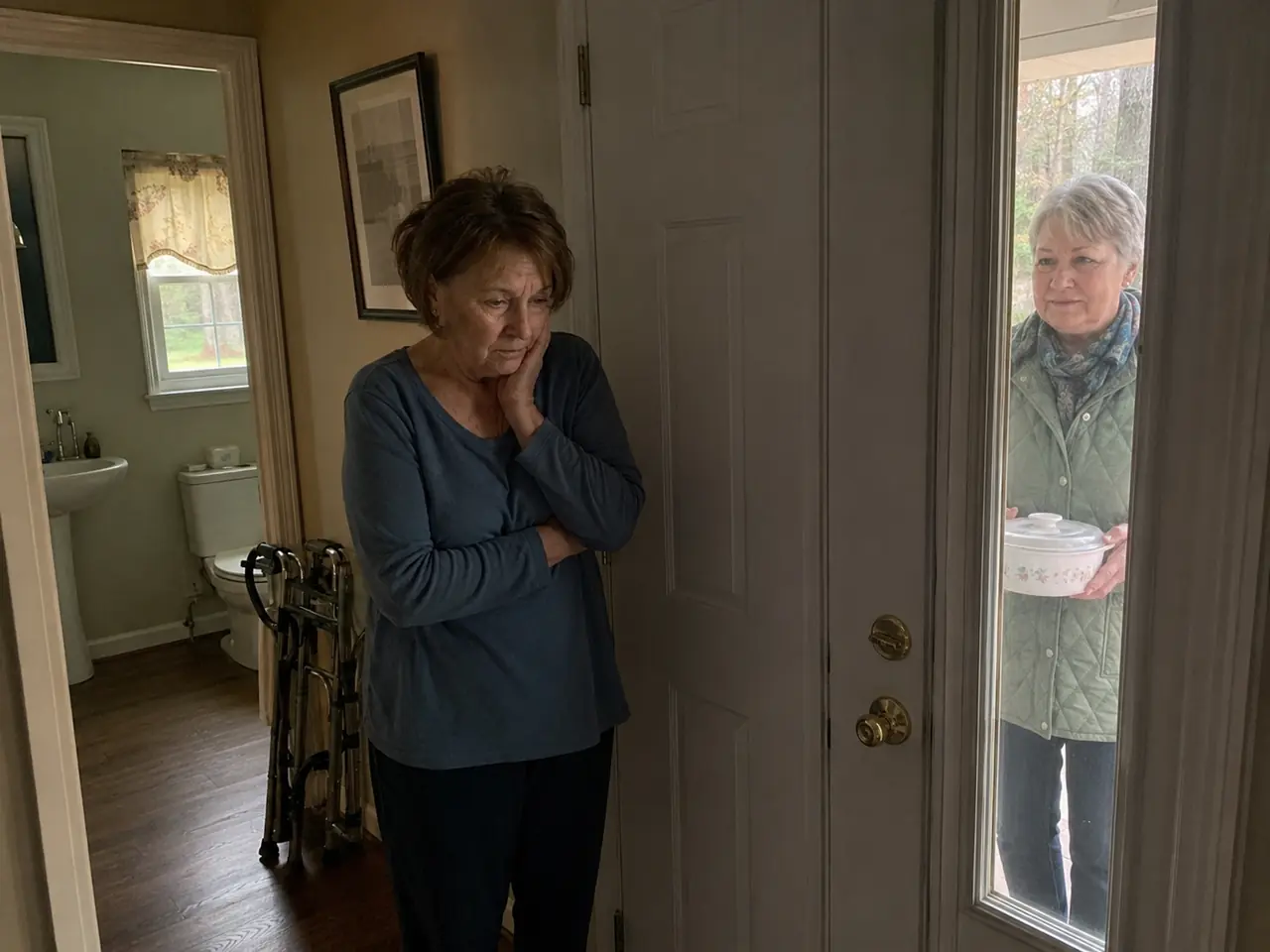
Through the peephole, Laura saw her neighbor holding a casserole.
Behind Laura, cleaner was soaking around the toilet pedestal. A hand brush was still lying beside the dark grout she had not reached.
The shower chair had dried mineral marks on its legs.
The bell rang again.
Laura turned off the hallway light and waited for her friend to leave.
The accident was over. But the bathroom was still controlling the front door.
One missed visit became three canceled dinners. Then no drop-ins.
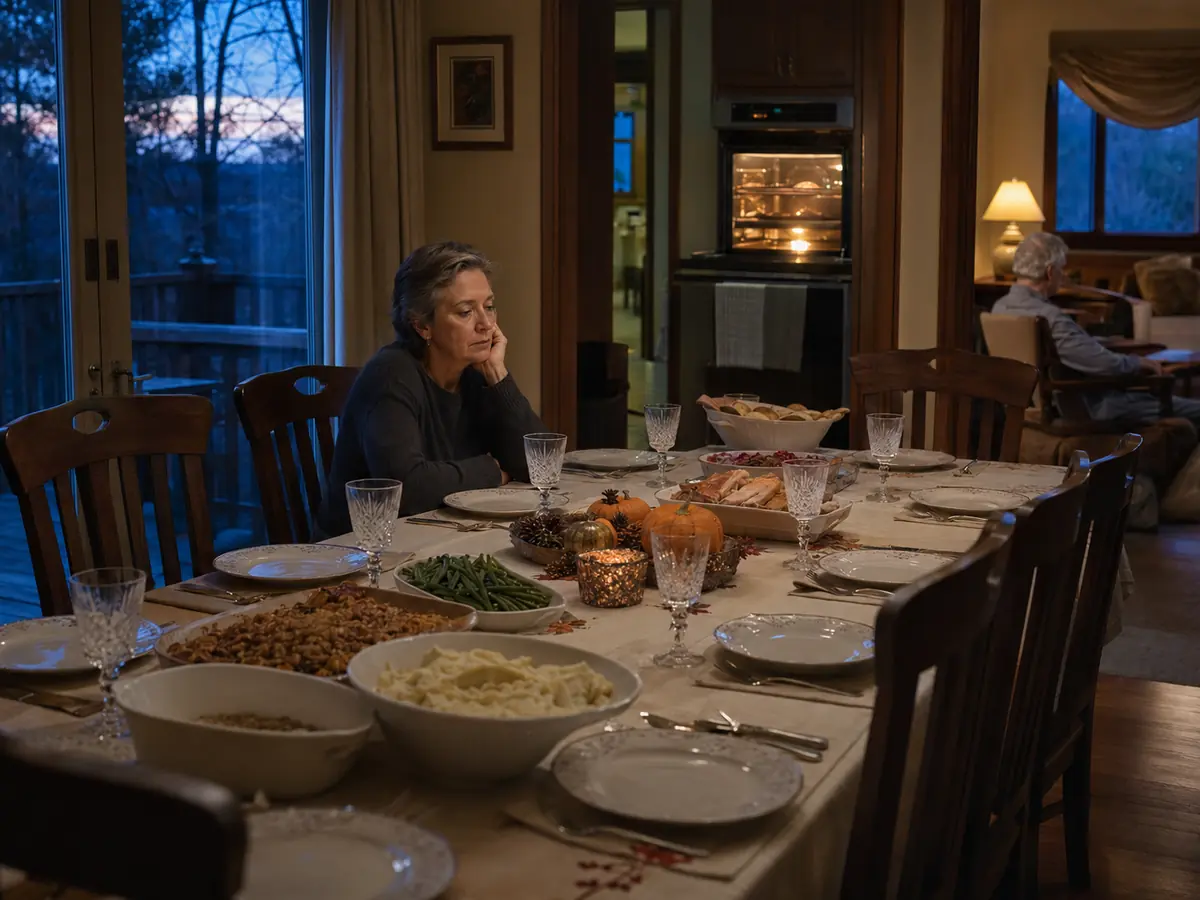
Then no grandchildren using the downstairs bathroom. When Laura’s sister asked her to host Thanksgiving “like Mom used to,” Laura said the oven was broken.
It was not.
Laura could manage her mother’s transfers. She could cook for twelve people.
She could not do all of that and then spend another hour kneeling around the toilet, tub and grout before anyone arrived.
Her mother heard the excuse from the next room.
That night she asked, “You do not invite people here because of me, do you?”
Laura denied it too quickly. Her mother turned toward the wall.
That is the hidden damage. Laura was cleaning to protect her mother’s dignity.
But every canceled visit told her mother that her body had made their home unfit for other people.
The bathroom was isolating both of them.
Isolation Has a Body Count.
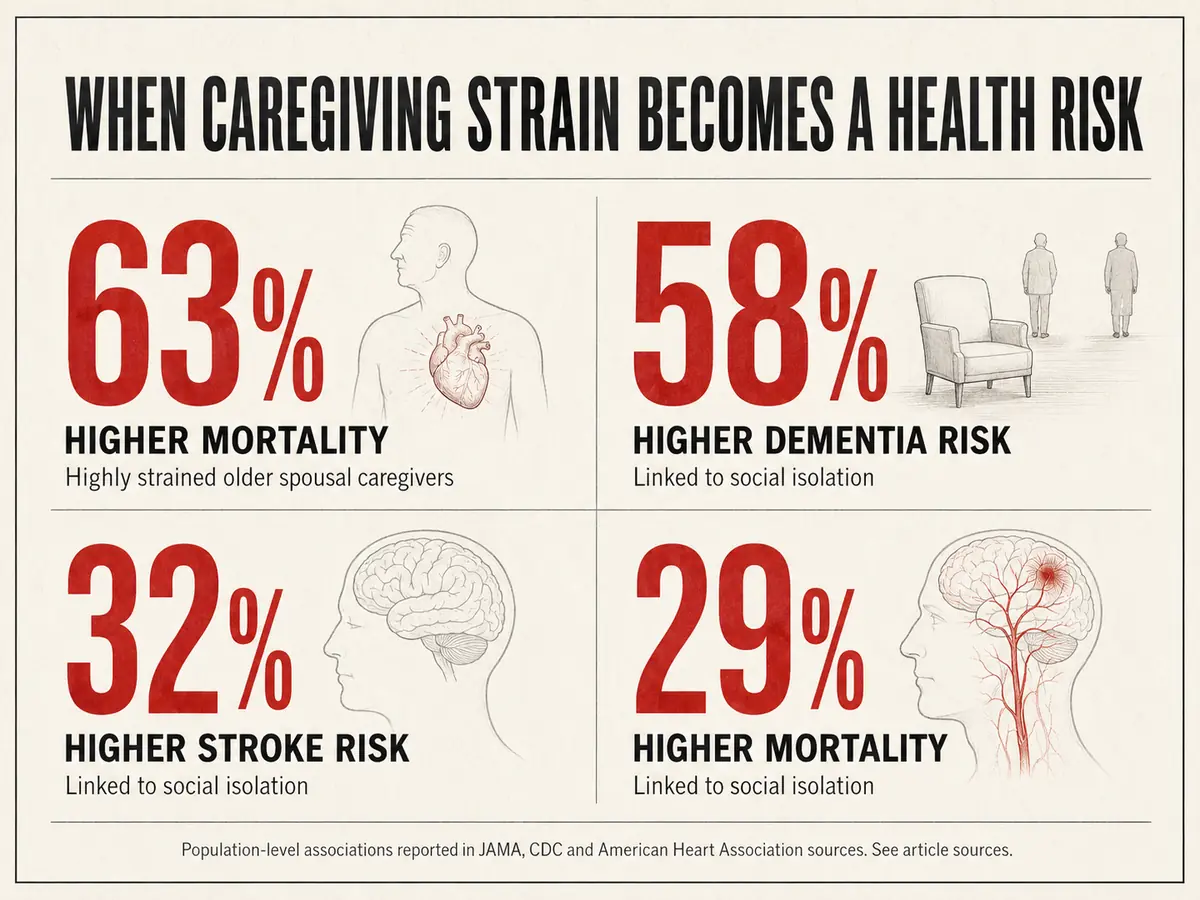
The U.S. Surgeon General links social disconnection to serious health consequences. For this caregiver pattern, the danger is a 74% higher dementia risk as the door stays closed and the social world disappears.
The statistic makes the chain impossible to dismiss:
Accident. Shame.
Locked door. Canceled visit.
Smaller life.
Repeat that chain for months and the caregiver loses support while the parent loses contact with the world.
People told Laura to “ask for help,” “make time for friends” and “stop worrying what people think.”
None of that answered the question controlling her life:
“What do I do when someone texts that they are five minutes away and the bathroom still needs to be reset?”
The Bottleneck Was Not Dirt. It Was Human-Powered Scrubbing.
Laura’s mop passed over recessed grout. Wipes handled the seat but missed the seam around the toilet base.
The small hand brush reached those areas only after Laura knelt, twisted and manufactured every scrubbing stroke with her wrist.
More spray did not fix the geometry. It only left more liquid and a stronger smell inside a small room.
The accident was unpredictable. The cleanup was slow.
So every visitor began to feel like a threat.
After the casserole incident, Laura’s daughter found the mop, wipes and hand brush scattered across the bathroom.
She did not tell Laura to relax. She asked a better question:
“Which part keeps you trapped in here?”
Laura pointed to the low grout, curved toilet seam and shower-chair marks.
Her daughter explained that hotel cleaning teams do not scrub every shape with one tiny brush. They use powered tools and change the head to match the surface.
That search led them to the Sumoria ScrubForce Pro.
Imagine a Power Toothbrush Built for the Entire Bathroom
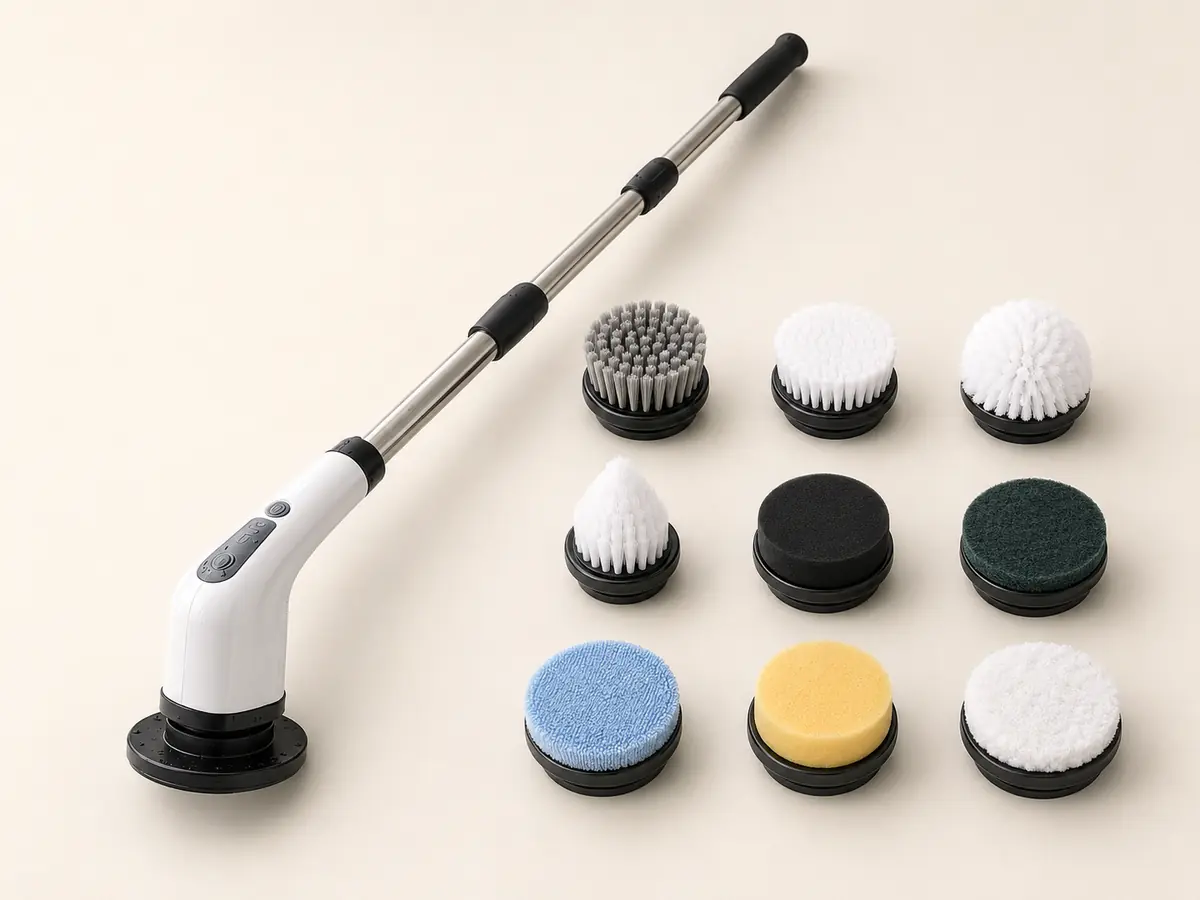
ScrubForce Pro is a cordless spin scrubber: a long-handled cleaning tool with a motor at the bottom that rapidly rotates the attached brush.
Instead of dropping to both knees and moving a hand brush back and forth hundreds of times, the caregiver places the spinning head against the surface and guides it.
Three parts change the job:
1. Powered rotation supplies the repeated scrubbing motion.
Laura controls where the brush goes; the motor handles the rapid strokes.
2. The adjustable extension handle brings the brush to the floor.
Low grout, tub walls and toilet edges come within reach while the user remains more upright.
3. Nine attachments match the shape being cleaned.
A broad head covers open tile. A curved head follows tubs and sinks.
Narrower heads reach grout, corners, edges and detail areas that a flat mop skips.
Laura no longer had to become the motor.
She removed visible material safely, used the appropriate cleaner or disinfectant for the surface, then let ScrubForce Pro attack the slow mechanical step that kept stealing the rest of her day.
The Next Knock Ended Differently
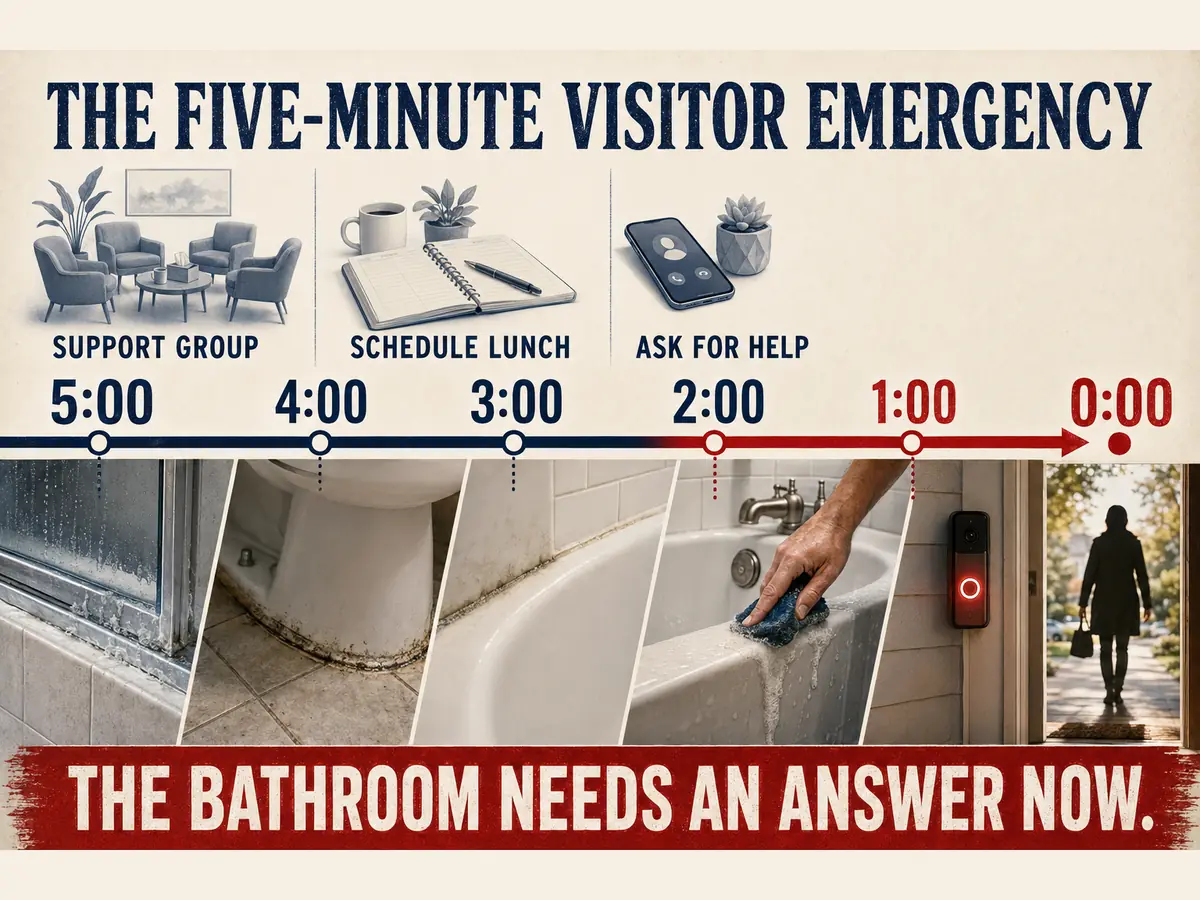
When Laura’s neighbor returned, the bathroom was clean, controlled and ready for an ordinary visit.
Laura had already guided the broad head across the floor, switched to a smaller attachment around the toilet base and handled the shower-chair marks without crawling from one surface to the next.
The bell rang.
Laura looked at her mother. Her mother looked toward the hallway.
This time, Laura opened the door.
The real value was not perfect grout. It was an ordinary Tuesday afternoon that shame did not get to steal.
The next accident, text message or knock will not schedule itself around your energy.
If bathroom cleanup is already deciding who enters your home, waiting does not preserve the life you have. It gives the same bottleneck another week to make that life smaller.
The equipment switch caregivers are making
See Why Caregivers Are Switching to ScrubForce Pro
✓ Opens the official Sumoria page for family caregivers.
How I Secured the Official Link for Caregivers
While examining powered-cleaning equipment, I spoke with a housekeeping operations contact who had worked at a major Las Vegas resort. She described the industrial version of this cleaning approach—the equipment her crews used to reset heavily used resort bathrooms in as little as eight minutes.
Eight minutes for a bathroom that could otherwise become a long, exhausting cleanup.
Her teams proved what the right equipment changes: long reach, powered rotation and a cleaning head matched to the surface move repeated scrubbing out of the caregiver’s hands and into the tool.
When I asked what family caregivers could buy, she gave me the official Sumoria link for the consumer ScrubForce Pro. I secured that direct access below so readers can go straight to the same cleaning system without wasting another dollar on weak look-alikes.
The current offer is $89 for one ScrubForce Pro, or $148 for two—$74 each. One can stay in the caregiver’s home; the second can stay where the person receiving care lives.
Protect the person doing the caring
Stop Doing the Hardest Part by Hand
Put powered reach and rotation between your body and the bathroom floor.
✓ Use the official Sumoria page to secure the current caregiver offer.
SEE IT HANDLE THE HARD PARTS
Watch What Long Reach and Powered Rotation Change
These are the bathroom areas that usually force caregivers to bend, kneel or scrub by hand. Watch the tool carry the repeated motion instead.
CAREGIVER EXPERIENCES
What Caregivers Say After They Stop Fearing the Doorbell
Different objections. One practical realization: the caregiver's body should not be the cleaning tool.
“My brother used to text from the driveway and I would still tell him Dad was asleep because I could not reset the downstairs bathroom fast enough. The first real test came when he gave me 20 minutes’ notice. I stayed standing, handled the grout and toilet base, changed the mat and opened the door. The room was clean, controlled and ready. For the first time in months, the bathroom did not decide whether family came inside.”
— Michael T., 61Family caregiver
“I had already thrown two cheap electric scrubbers into the garage. One stalled against the tub ring and the other felt like a toy around the toilet base. That was my biggest objection. The Sumoria head keeps working while I guide it, and the longer handle reaches the places those little wands could not. I finally cleared the dead gadgets out because this is the one I actually keep charged in the bathroom closet.”
— Denise R., 56Family caregiver
“I am not interested in complicated equipment, and my hands get stiff after ten minutes of scrubbing. The controls took me one cleanup to understand. I use the broader head on the floor, the smaller one around the toilet and let the motor do the repetitive motion while I stay upright. I still clean carefully and at my own pace, but I am no longer gripping a hand brush through hundreds of strokes.”
— Arun P., 67Family caregiver
“I paused at the price because caregiving already drains the budget and I did not want another purchase collecting dust. Then I compared it with even one extra emergency cleaning visit—and with how often I was paying for small scrubbers that failed. I use only three of the heads regularly, but those three cover every problem area in our bathroom. What made it worth keeping was simple: I reach for it every week, and I do not have to get on the floor.”
— Janelle B., 59Family caregiver
THE NEXT CLEANUP WILL NOT WAIT
You’ve Seen the Objections. Now Protect the Person Doing the Work.
✓ Use the official Sumoria page to secure the current caregiver offer.
Sources
- Schulz R, Beach SR. “Caregiving as a Risk Factor for Mortality: The Caregiver Health Effects Study.” JAMA. 1999;282(23):2215–2219. https://pubmed.ncbi.nlm.nih.gov/10605972/
- Valtorta NK, et al. “Loneliness and Social Isolation as Risk Factors for Coronary Heart Disease and Stroke.” Heart. 2016;102(13):1009–1016. https://pubmed.ncbi.nlm.nih.gov/27091846/
- Holt-Lunstad J, et al. “Loneliness and Social Isolation as Risk Factors for Mortality: A Meta-Analytic Review.” Perspectives on Psychological Science. 2015;10(2):227–237. https://pubmed.ncbi.nlm.nih.gov/25910392/
- Kuiper JS, et al. “Social Relationships and Risk of Dementia: A Systematic Review and Meta-Analysis of Longitudinal Cohort Studies.” Ageing Research Reviews. 2015;22:39–57. https://pubmed.ncbi.nlm.nih.gov/25956016/
- CDC. “Changes in Health Indicators Among Caregivers — United States, 2015–2016 to 2021–2022.” MMWR. 2024. https://www.cdc.gov/mmwr/volumes/73/wr/mm7334a2.htm
- AARP and National Alliance for Caregiving. Caregiving in the U.S. 2025. https://doi.org/10.26419/ppi.00373.001
- Stroppa V, et al. “Social Isolation Among Individuals with Incontinence: A Scoping Review.” Nursing Reports. 2025;15(11):375. https://pmc.ncbi.nlm.nih.gov/articles/PMC12655203/